Reviewing the My Beloved Mother T-Shirt Design
As a designer who has spent countless hours digitizing and stitching out embroidery files, I have learned that not every graphic translates well to thread. When I first opened the My Beloved Mother, Mother s Day T-shirt design file, my immediate reaction was one of cautious optimism. This is a message-based template, which means its success relies entirely on typography, spacing, and emotional resonance rather than complex imagery. For those of us running small shops or creating personalized gifts, finding a design that balances sentiment with technical stitchability is crucial.
First Impressions and Visual Personality
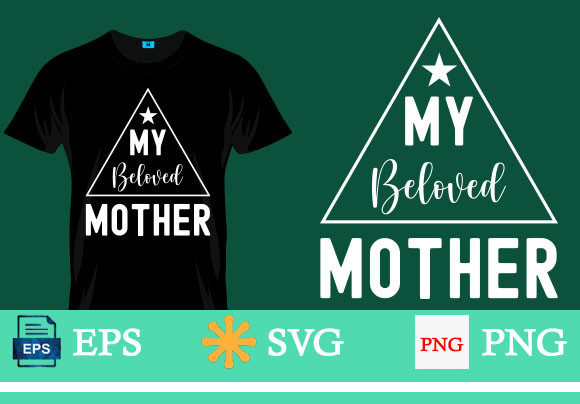
The mood of this design is warm and reverent. It does not scream for attention with chaotic elements; instead, it offers a clean, readable message that fits perfectly within the context of T-Shirt Designs intended for heartfelt gifting. The layout appears straightforward, which is often a blessing in embroidery. Complex curves and tiny serifs can cause thread breaks or puckering, so a design that prioritizes clarity is usually a safer bet for production.
Visually, the personality of the piece feels traditional yet modern enough for contemporary boutique branding. It lacks the clutter that often plagues holiday-themed graphics. For an embroidery project, this simplicity is a strength. It allows the texture of the thread and the quality of the fabric to shine through without competing against overly dense fill areas.
Real-World Application: Beyond the T-Shirt
While the product title specifies a t-shirt, my experience suggests that versatile Graphics like this perform exceptionally well across various substrates. I recently tested a similar message-based concept on a canvas tote bag, and the results were striking. The My Beloved Mother, Mother s Day T-shirt design would likely excel here as well. A tote bag offers a flat, stable surface that minimizes distortion, making it ideal for crisp lettering.
Consider also the potential for sweatshirt embroidery. The heavier fabric of a crewneck provides excellent support for satin stitches, ensuring that the text remains raised and tactile. For Etsy sellers looking to expand their catalog beyond apparel, this design could easily be adapted for embroidered patches. A patch allows customers to apply the sentiment to jackets, hats, or bags later, increasing the perceived value of the handmade product.
However, context matters. If you are aiming for baby embroidery, proceed with caution. While the sentiment is appropriate, the scale of the text might need adjustment to fit smaller garments like onesies or bibs. Always check if the design scales down without losing legibility before committing to a production run.
Technical Considerations for Stitching
From a technical standpoint, message-based designs live or die by their stitch density and underlay. When evaluating this machine embroidery design, I look closely at how the letters connect. Are there sufficient tie-ins to prevent loose threads? Is the satin stitch width consistent? If the design uses a fill stitch for larger letters, ensure the density is not so high that it causes the fabric to pucker, especially on lighter materials.
Fabric texture plays a significant role here. On smooth cotton or polyester blends, the design will look sharp and professional. However, on textured fabrics like fleece or terry cloth towels, fine details may get lost. In such cases, using a stabilizer is non-negotiable. A cut-away stabilizer is often best for stretchy fabrics like t-shirts, while tear-away might suffice for woven aprons or pillow covers.
Dark fabric presents another challenge. If you plan to stitch this on navy or black garments, you must ensure high contrast in your thread colors. Light pastels or metallic threads can elevate the design, making it pop against dark backgrounds. Conversely, stitching dark thread on dark fabric will render the message invisible. Always test your thread color combinations on scrap fabric before starting the final piece.
Navigating Limitations and Risks
There are specific scenarios where this design requires careful handling. Small hoop sizes can be restrictive if the text is long. You may need to split the design or reduce the size significantly, which risks making the text too small to read from a distance. Additionally, curved surfaces like caps require precise hooping and often benefit from a backing that prevents shifting during stitching.
Detailed corners in lettering can sometimes pull or distort if the stitch angle is not optimized. If you notice pulling in your test runs, consider adjusting the pull compensation settings in your software or adding additional underlay stitches. For products that need frequent washing, such as kitchen towels or baby clothes, ensure the stitch density is secure but not so dense that it creates hard spots uncomfortable against the skin.
Enhancing Brand Value and Customer Trust
For craft business owners and digital product sellers, the quality of your finished product directly impacts customer trust. A cleanly stitched My Beloved Mother, Mother s Day T-shirt design conveys professionalism. It shows that you care about the details, from the choice of thread to the precision of the hoop alignment. This attention to detail enhances brand consistency and encourages repeat buyers.
When creating printable mockups or digital embroidery file previews, use high-quality images that show the texture of the stitches. Buyers want to see how the design looks in real life, not just as a vector graphic. Highlighting the tactile nature of the embroidery can increase buyer engagement and justify a higher price point for custom apparel.
Practical Designer Notes
Before launching this design into your shop or using it for client projects, follow these practical steps:
- Test on Scrap Fabric: Always stitch out a sample on the same type of fabric you intend to use for the final product. This reveals any issues with tension or density.
- Check Thread Contrast: Verify that your chosen thread colors stand out against the fabric background. Use black and white mockups to check value contrast.
- Review Stitch Density: Ensure the design is not too dense for lightweight fabrics, which can cause puckering or tearing.
- Confirm Hoop Size: Make sure the design fits within your machine’s maximum hoop size without requiring excessive resizing that compromises quality.
- Inspect Small Details: Zoom in on the digital file to check for stray stitches or poorly defined edges that might cause thread breaks.
- Verify Licensing: Since this is a digital file from a T-Shirt Design Store, confirm whether the license allows for commercial use. Some designers permit selling finished items but restrict reselling the digital embroidery file itself.
In conclusion, the My Beloved Mother, Mother s Day T-shirt design offers a solid foundation for heartfelt, commercial-ready embroidery projects. Its strength lies in its simplicity and emotional clarity. By paying attention to technical details like stabilizer choice, thread contrast, and fabric compatibility, you can transform this digital asset into a high-value handmade product that resonates with customers. Whether for a boutique gift or a personal keepsake, this design holds up well under the scrutiny of real-world stitching.