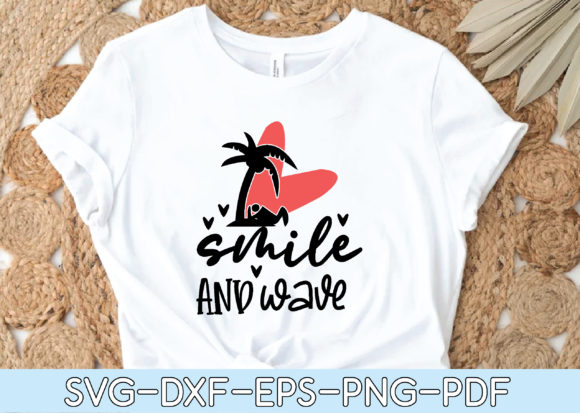
Smile and Wave Svg: A Designer's Real-World Review
As someone who has spent years navigating the intersection of digital art and physical stitching, I approach every new machine embroidery design with a specific set of questions. Will it stitch out cleanly? Does it translate well from a screen to fabric? And most importantly, will my customers actually want to wear or display it? When I first opened the files for Smile and Wave Svg, I was looking for a cheerful, versatile asset that could elevate a simple tote bag or add a personal touch to a boutique sweatshirt. The promise of an INSTANT DOWNLOAD containing SVG, PNG, DXF, PDF, and EPS files is always convenient, but the real test lies in how the embroidery file performs under the needle.
First Impressions: Mood and Visual Personality
The initial look at Smile and Wave Svg suggests a design rooted in positivity and approachability. In the world of T-Shirt Designs and general Graphics, this kind of imagery serves as a universal language. It isn't overly complex, which is often a blessing when dealing with stitch density and thread tension. The layout feels balanced, avoiding the trap of being too sparse or unnecessarily cluttered. For a designer like me, this balance is crucial because it means the design can scale relatively well without losing its core identity.
However, seeing a vector on a screen is only half the battle. The true character of Smile and Wave Svg emerges when you imagine it rendered in thread. The curves of the wave and the arc of the smile suggest areas where satin stitch would shine, providing a glossy, professional finish. Conversely, larger filled areas would likely require a solid fill stitch pattern. The visual personality here is friendly and inviting, making it an excellent candidate for handmade products aimed at families, teachers, or community-focused small businesses.
Real-Life Application: From Digital File to Finished Product
To truly evaluate this design, I need to visualize it in a real-world scenario. Imagine preparing a custom embroidered tote bag for a local craft fair. The canvas is sturdy, perhaps a heavy cotton blend, and the goal is to create a tote bag design that stands out against a sea of plain bags. Using Smile and Wave Svg here offers immediate appeal. The simplicity allows the design to remain legible even from a distance, which is vital for small shop product visibility.
Consider another scenario: a personalized gift for a new mother. Baby embroidery requires softness and clarity. If I were using this design on a onesie or a nursery pillow cover, the lack of jagged edges in the original graphic translates well to smooth stitching. The design fits naturally into the category of holiday gifts or welcoming home presents. Unlike intricate floral patterns that might get lost on textured fabrics, the bold lines of Smile and Wave Svg maintain their integrity on softer materials like fleece or jersey knit used in sweatshirt embroidery.
For the Etsy seller or creative entrepreneur building a brand, consistency is key. This design acts as a strong design asset that can be repeated across various mediums. Whether it is printed on a mug, cut as a vinyl decal, or stitched onto an apron, the core message remains clear. The availability of high-resolution files means I can create accurate printable mockups to showcase potential buyers exactly what they are getting, boosting customer trust before they even make a purchase.
Navigating Challenges: Where Caution Is Needed
While Smile and Wave Svg is robust, no design is immune to the pitfalls of poor execution. As an experienced reviewer, I must highlight where caution is required. If you plan to use this on very small hoop sizes, such as for a cap patch or a tiny embroidered patch, you must ensure the details do not become muddy. Tiny lettering or fine lines within the wave gesture can sometimes collapse if the hoop size is too restrictive, leading to thread bunching.
Fabric choice is equally critical. On textured fabrics like denim or thick wool, the smooth curves of the smile might struggle to lay flat if the stabilizer is insufficient. Similarly, on dark fabrics, the contrast becomes paramount. Without careful selection of thread colors, the design could lose definition. I always recommend testing the design on scrap fabric first, especially if you are working with stretchy materials where the running stitch outline might distort over time.
Another area of concern is the longevity of the finished product. Items that undergo frequent washing, such as kitchen towels or daily-wear tees, require a design with appropriate stitch density. If the fill is too dense, it can stiffen the fabric; too loose, and it may snag. Before committing to a batch of custom apparel, run a test stitch to see how the design holds up after a few wash cycles. This step protects your reputation as a maker and ensures the finished product meets quality standards.
Practical Notes for the Professional Maker
For those ready to integrate Smile and Wave Svg into their workflow, here are a few practical notes based on my experience. First, always check the licensing terms. While the listing mentions it can be printed on anything, you must confirm if selling the digital embroidery file itself is permitted or if the license restricts you to selling only the physical finished product. This distinction is vital for commercial embroidery projects.
Second, take advantage of the multiple file formats provided. The SVG and DXF files are perfect for cutting machines if you decide to pair the embroidery with an applique design element. The PNG and PDF versions are ideal for creating marketing materials or personalized gift tags. Don't rely solely on one format; versatility is your friend in a craft business.
Finally, think about the context of the design. Smile and Wave Svg works best when it feels intentional. Pair it with complementary text or other motifs to create a cohesive look on a pillow cover or apron. Avoid overcrowding the design space, as the charm of this graphic lies in its simplicity. By respecting the design's inherent strengths and managing the technical aspects of stitching, you can create a product that not only looks professional but also resonates emotionally with your customers.
In conclusion, Smile and Wave Svg is a solid addition to any designer's library. It offers a blend of simplicity and charm that translates well across various applications, from apparel decorators to hobbyists. With proper preparation and attention to detail, it can become a staple in your collection of commercial embroidery assets, helping you build a brand known for quality and thoughtful design.